
We’re down to the bottom of the barrel, the end of the line, the bitter end…..I can hear the Fat Lady starting to sing. We only banded 14 birds today. Now some of them were still migrants ( we banded Chestnut-sided, Magnolia, and Wilson’s Warblers and a Blackburnian was seen on census) but we’re just about done. It would be interesting to know if these late migrants breed successfully this year or will arrive too late.
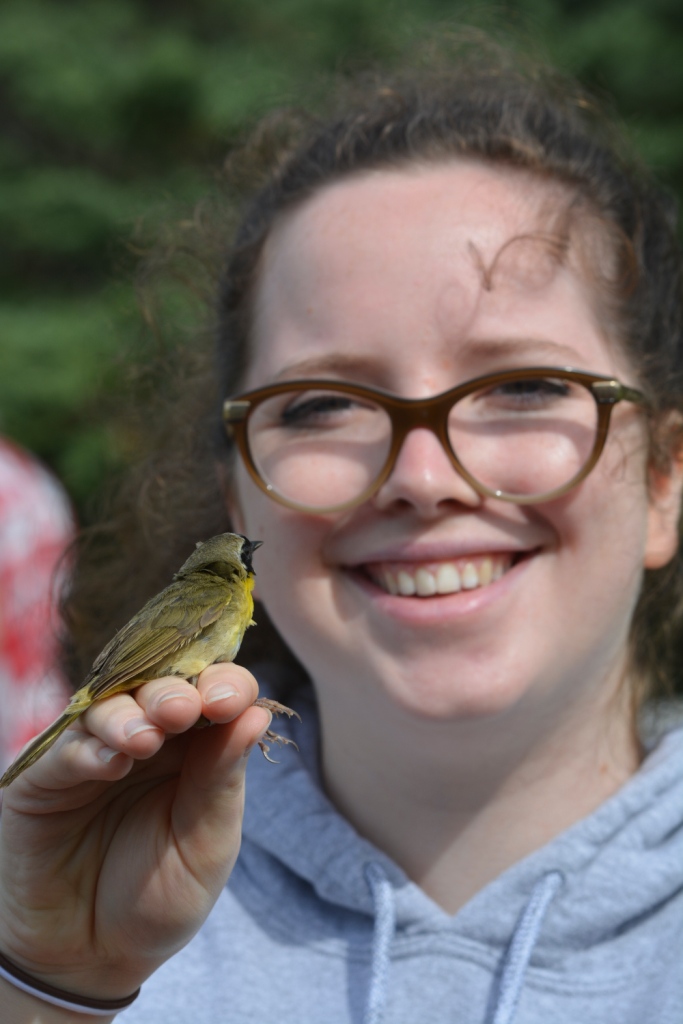
Banded 14:
1 Traill’s Flycatcher (probably these are Willow Flycatchers as they are singing around the site)
1 Blue-gray Gnatcatcher
1 Cedar Waxwing
1 Blue-winged Warbler
1 Chestnut-sided Warbler
1 Magnolia Warbler
1 Blackpoll Warbler
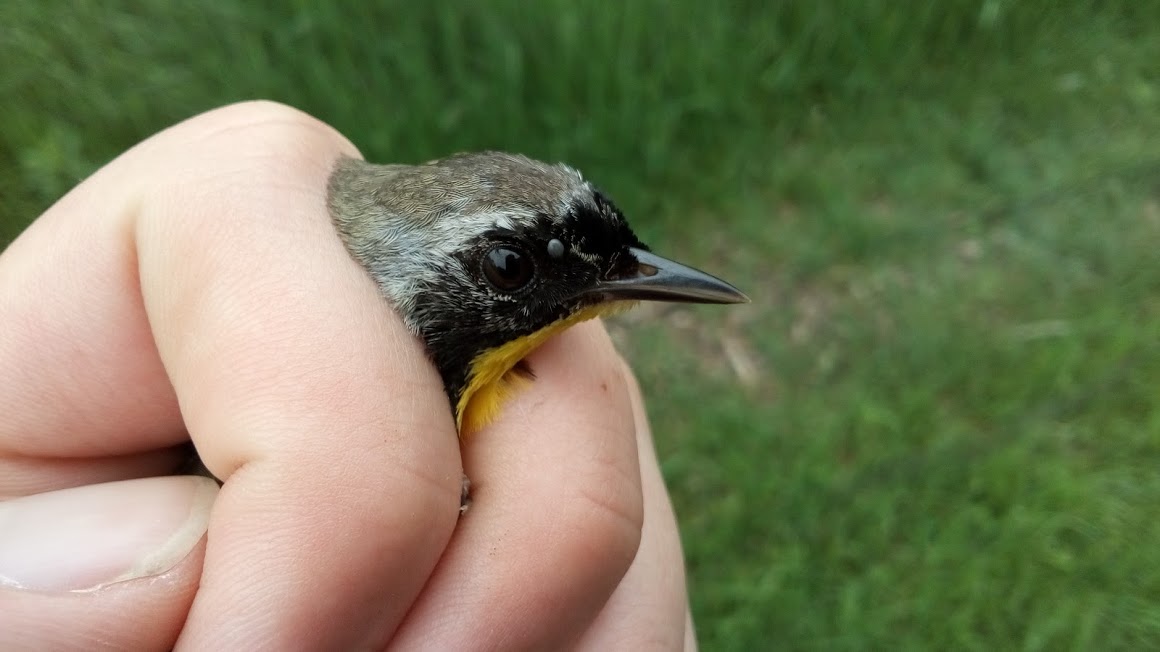
2 Common Yellowthroats
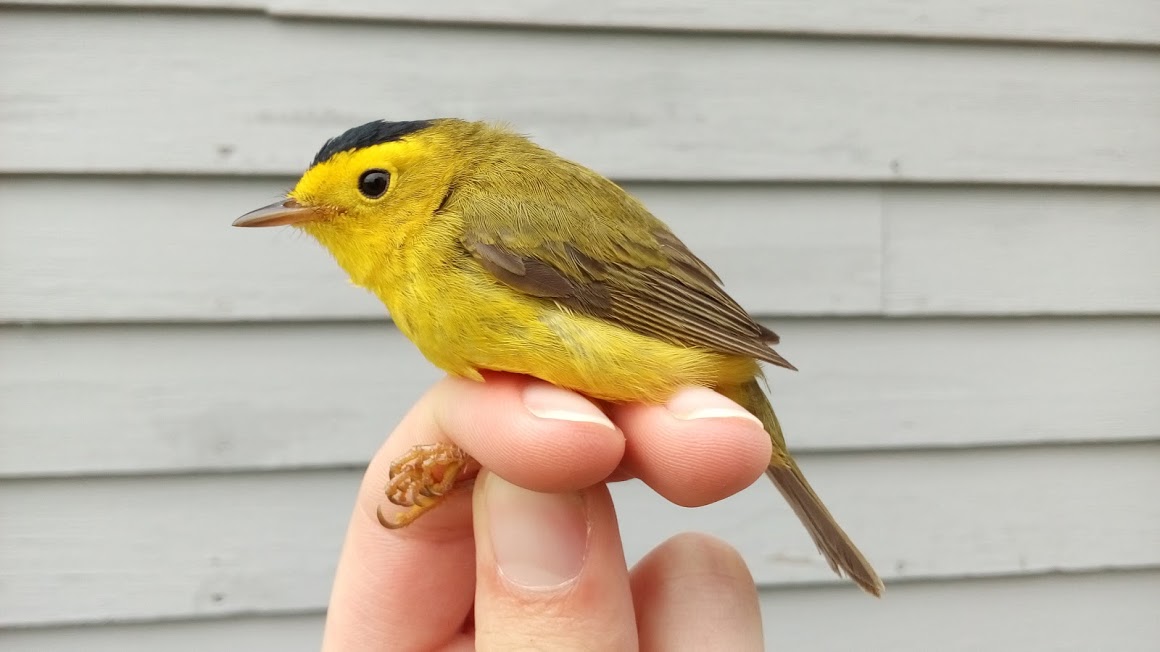
2 Wilson’s Warblers
1 Indigo Bunting
1 Chipping Sparrow
1 Song Sparrow
ET’s: 60 spp. (including a VERY uncommon Red-headed Woodpecker)
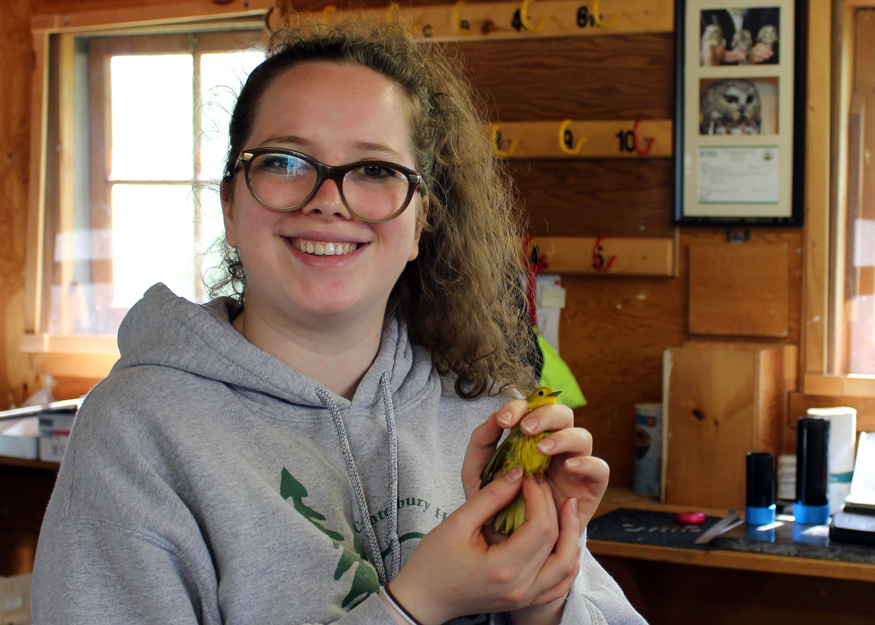
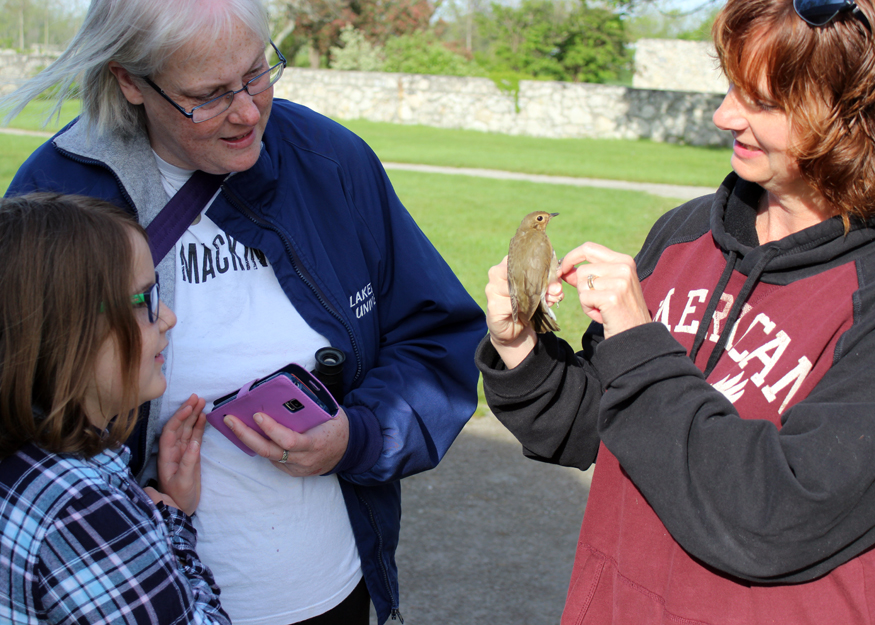
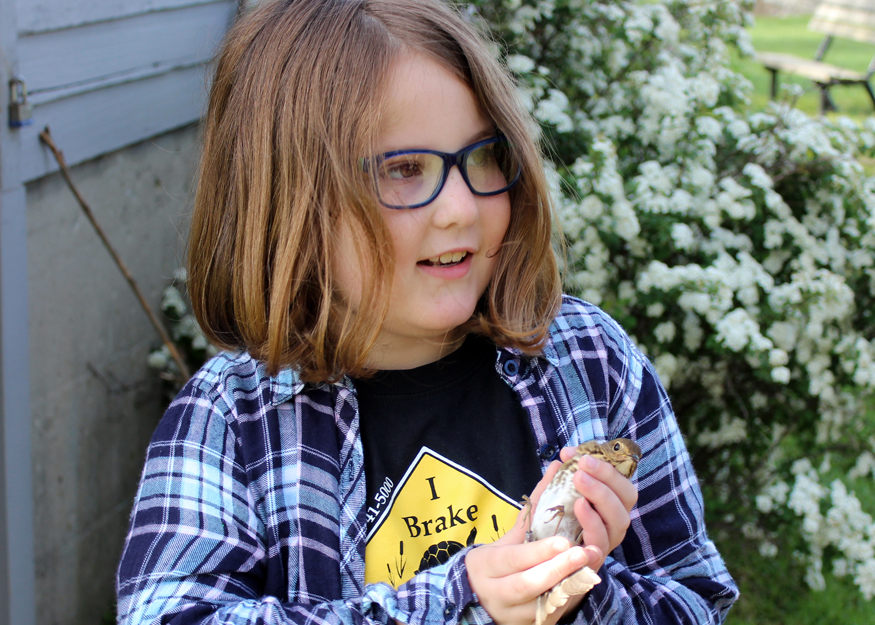
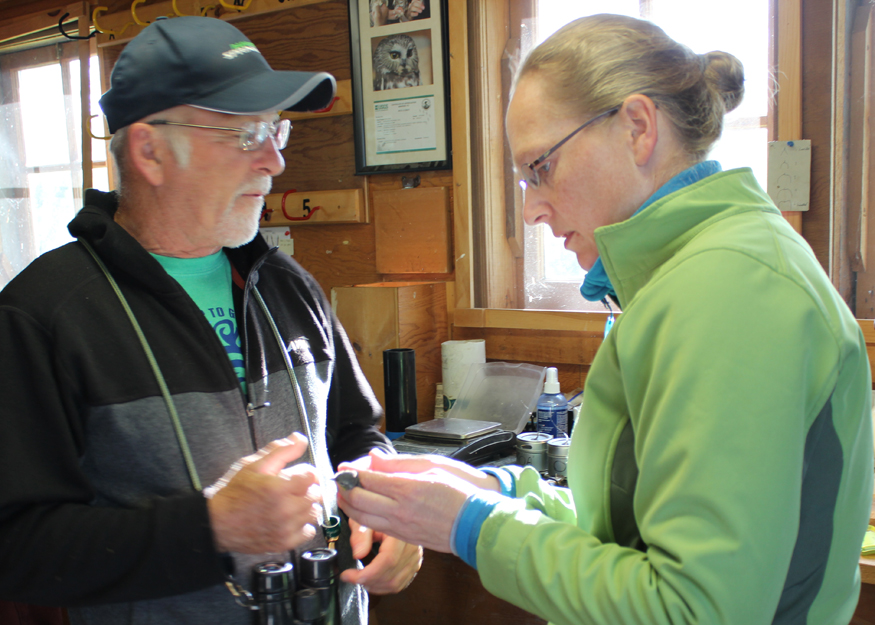
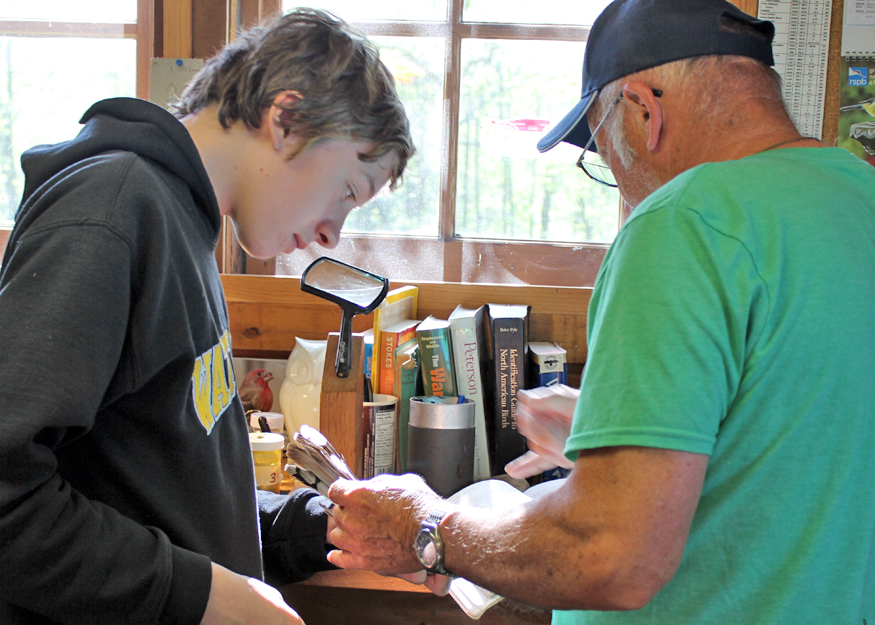
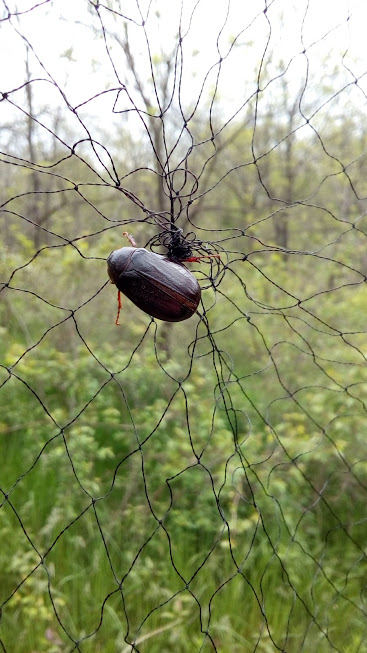
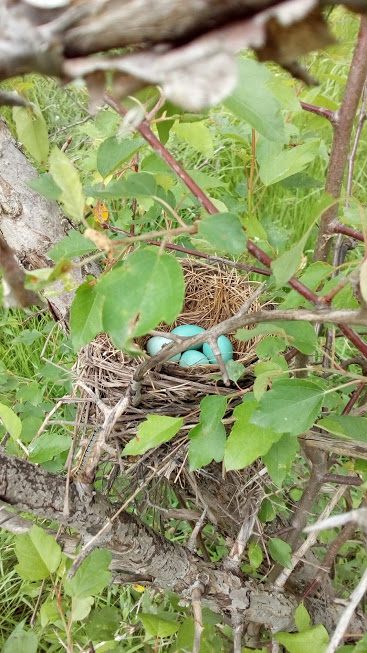
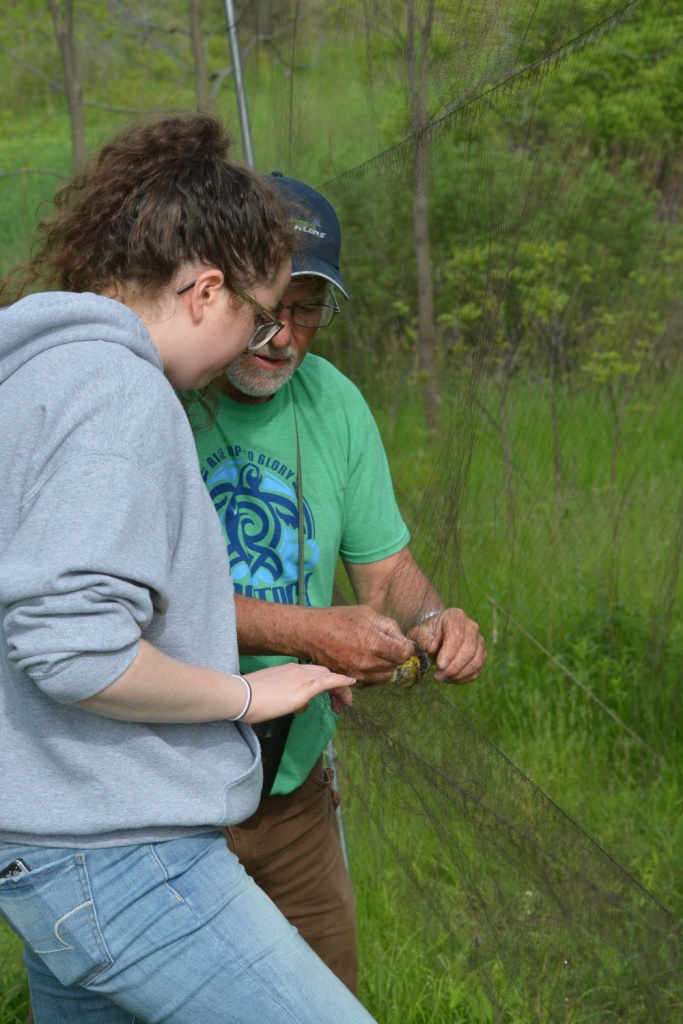
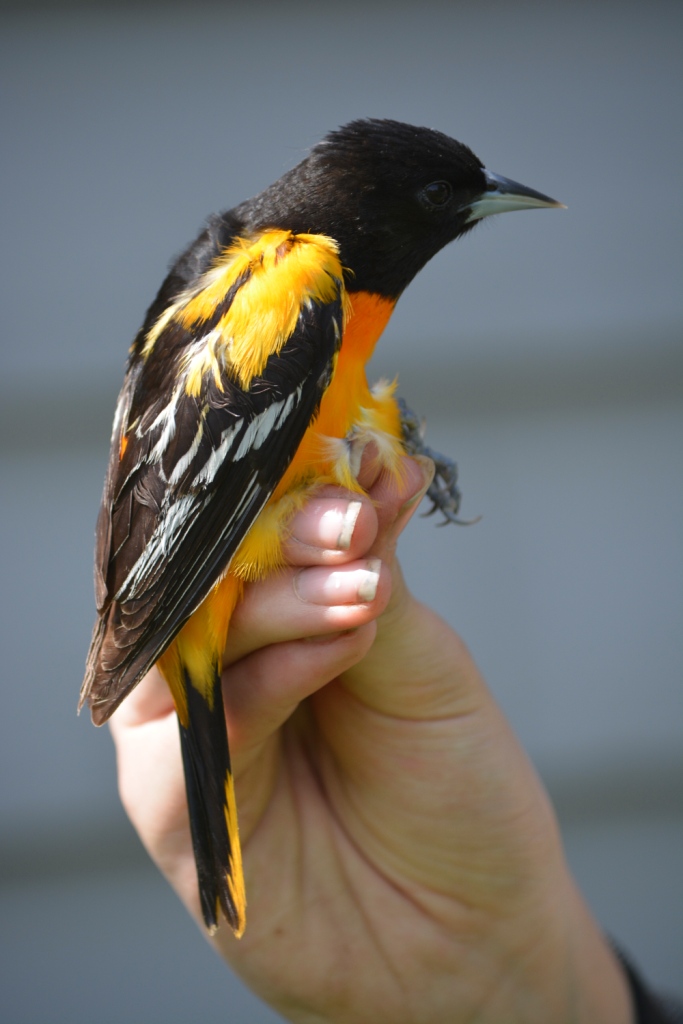
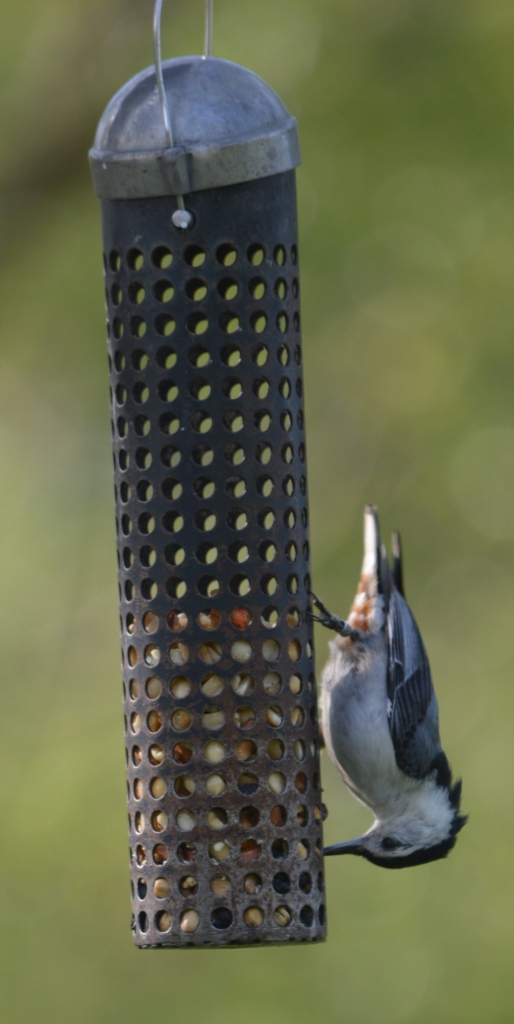
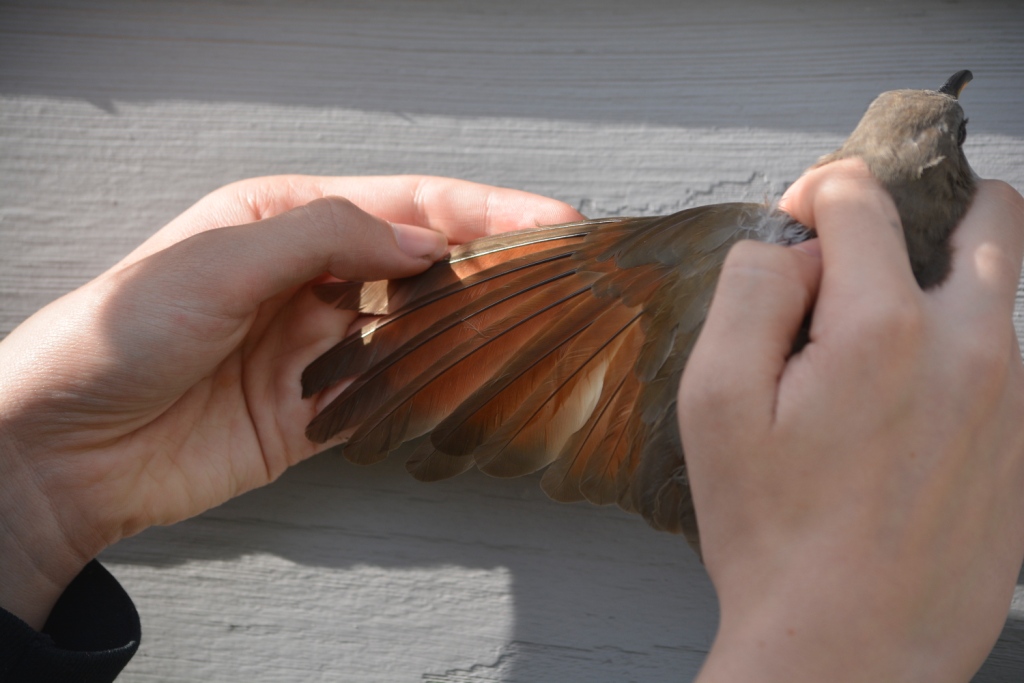
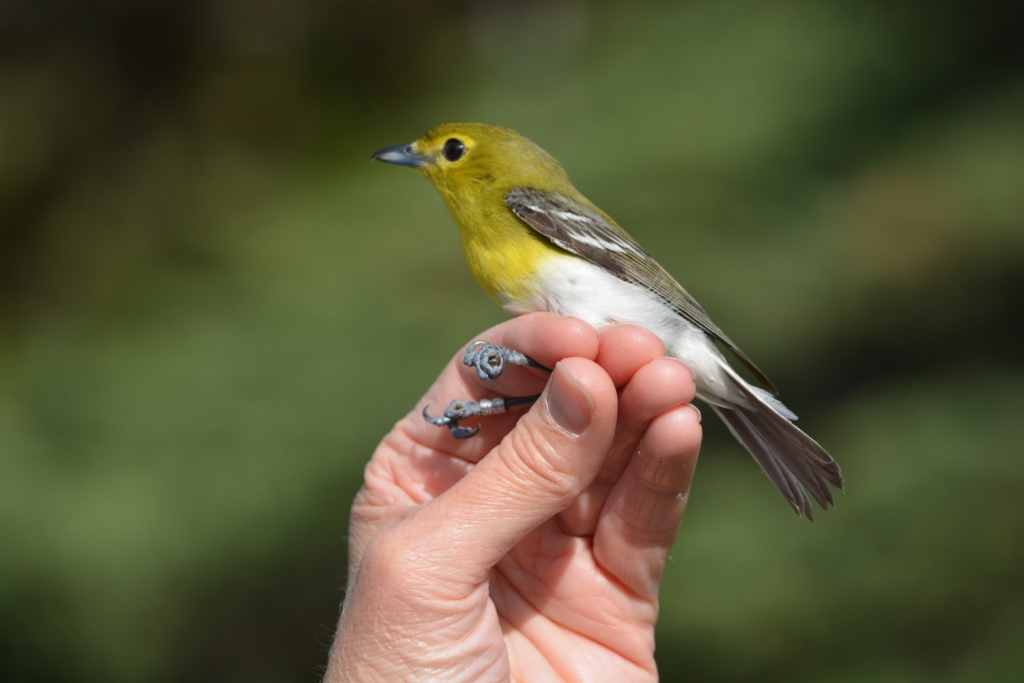
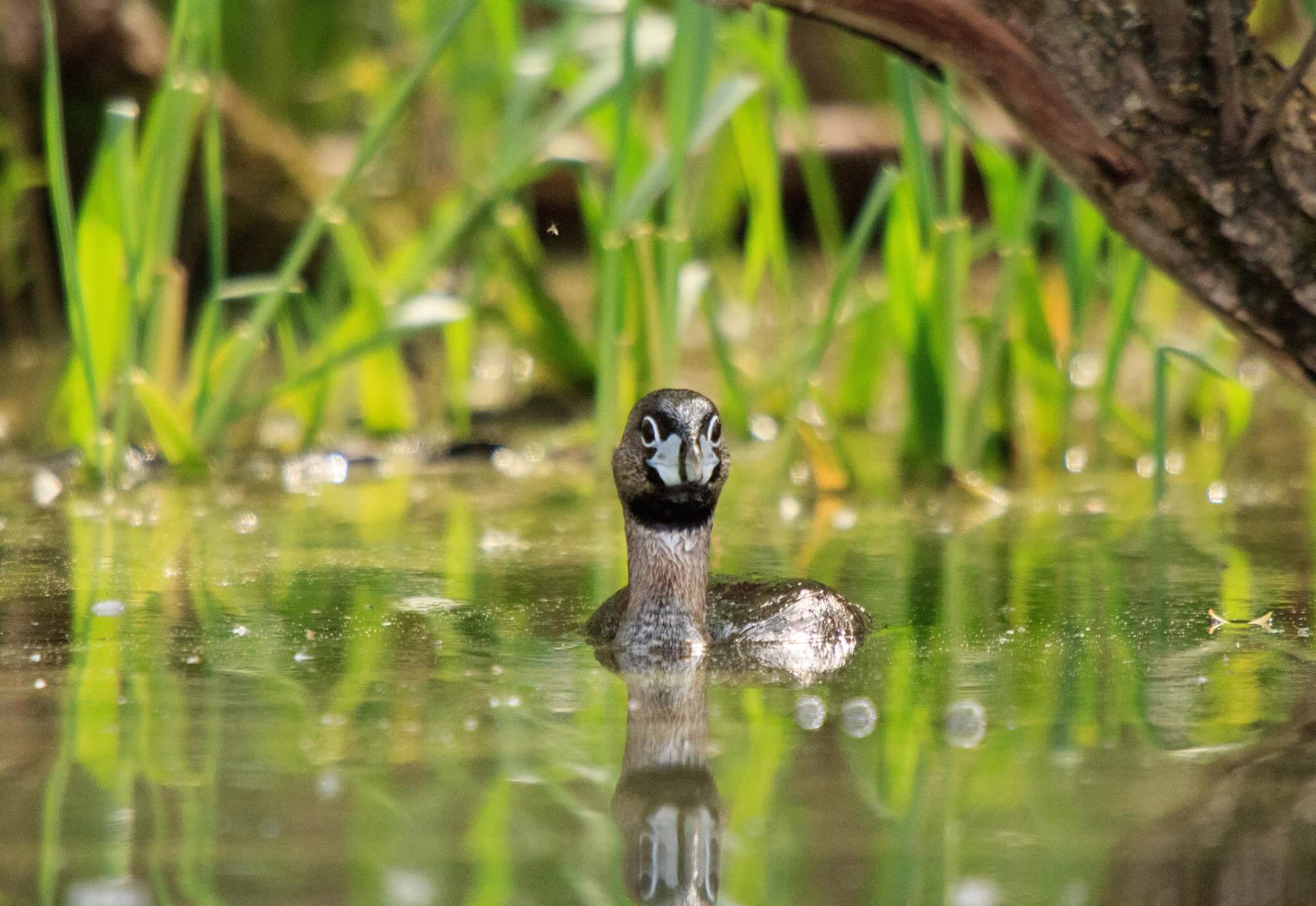
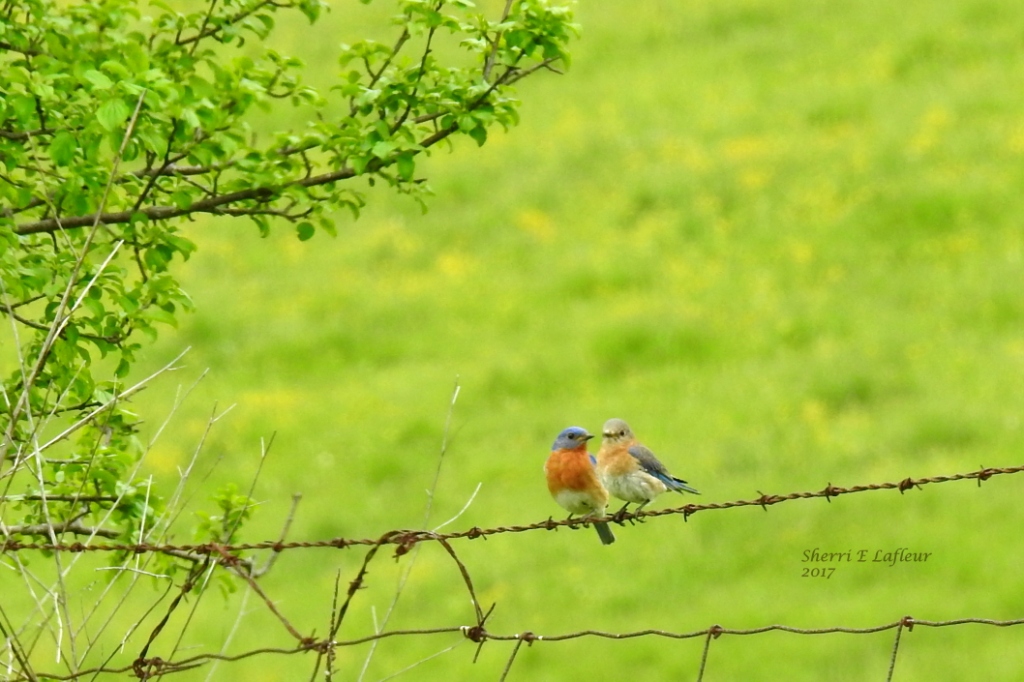
Photo Gallery: (Some of these shots are from previous days. To cover this up I like to wear the same T-shirt multiple days in a row so you think it’s the same day……)
About those moths:
Judy Robins chimed in: I just can’t pass up a good ID quiz. After a lengthy swim in my field guide, I’ve come away with the following:

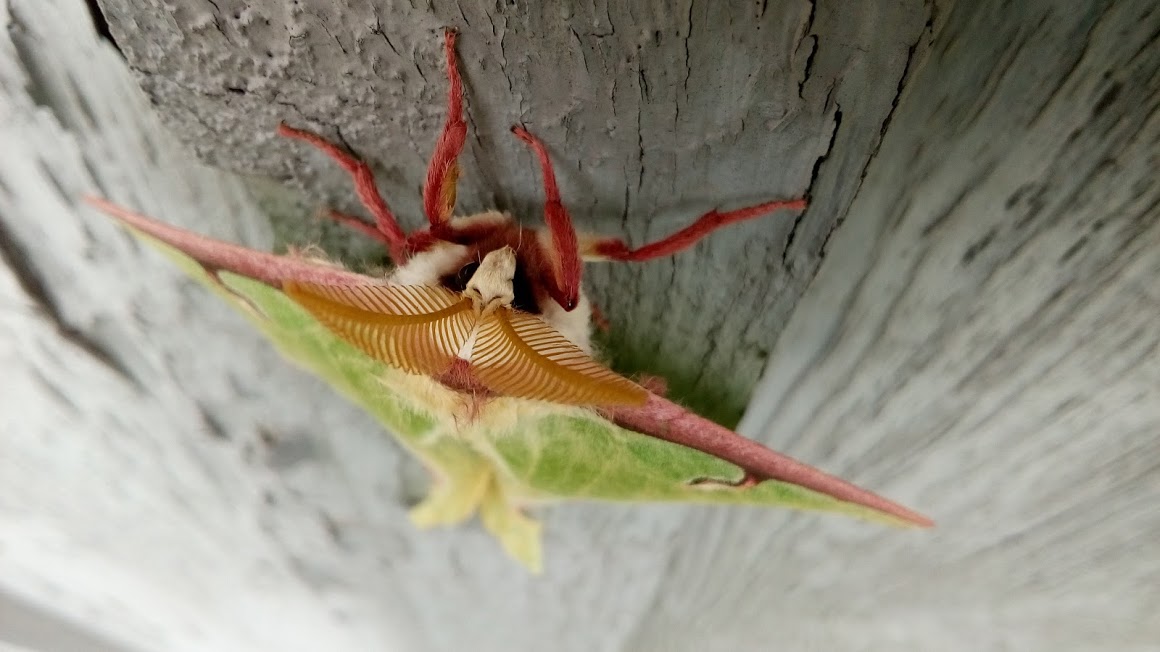
Mystery moth #1: Male Io moth—he’s hiding some striking eye spots under those forewings (and would have made an ID much easier if he’d been accommodating enough to show them);

Mystery moth #2: Hickory Tussock Moth—host trees include ash, elm, hickory, maple. Caterpillar form packs a poisonous punch.
Thanks Judy!

And then Caleb Scholtens let me know (diplomatically) that the Cecropia Moth was, in fact, a Polyphemus Moth. (Of course! What was I thinking!?)
And from Fern Hill – Burlington:
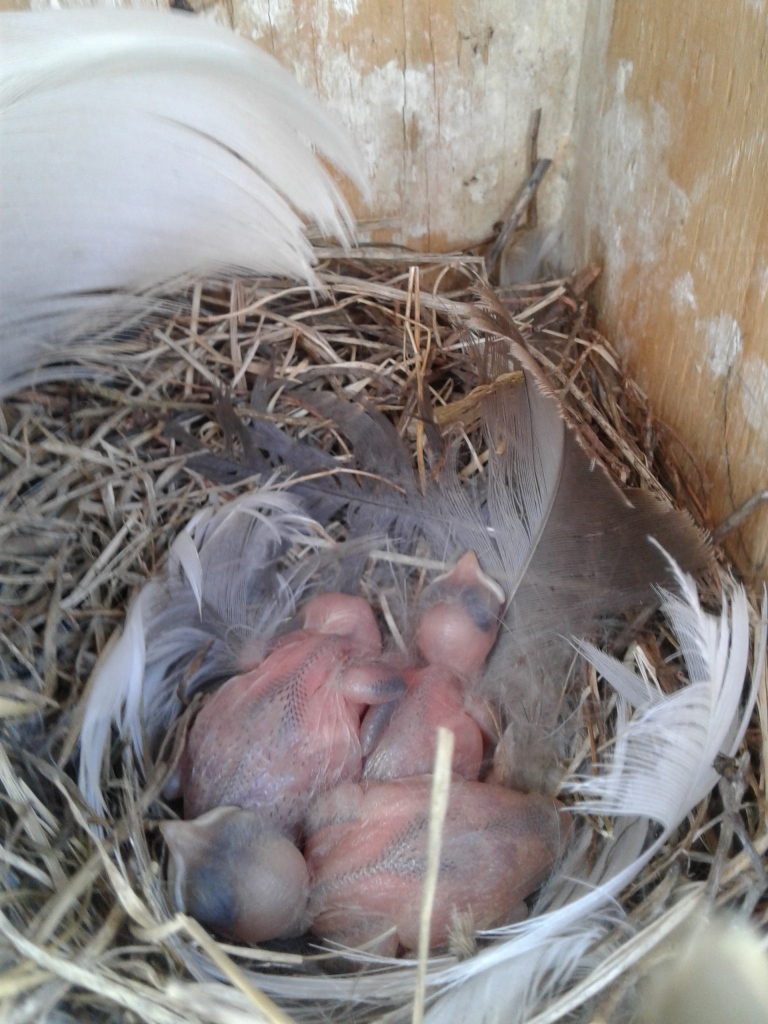
Today at the school we had a relatively slow day bandingwise with a total of 8 birds banded of 3 species. We banded:
5 Gray Catbirds
1 Yellow Warbler
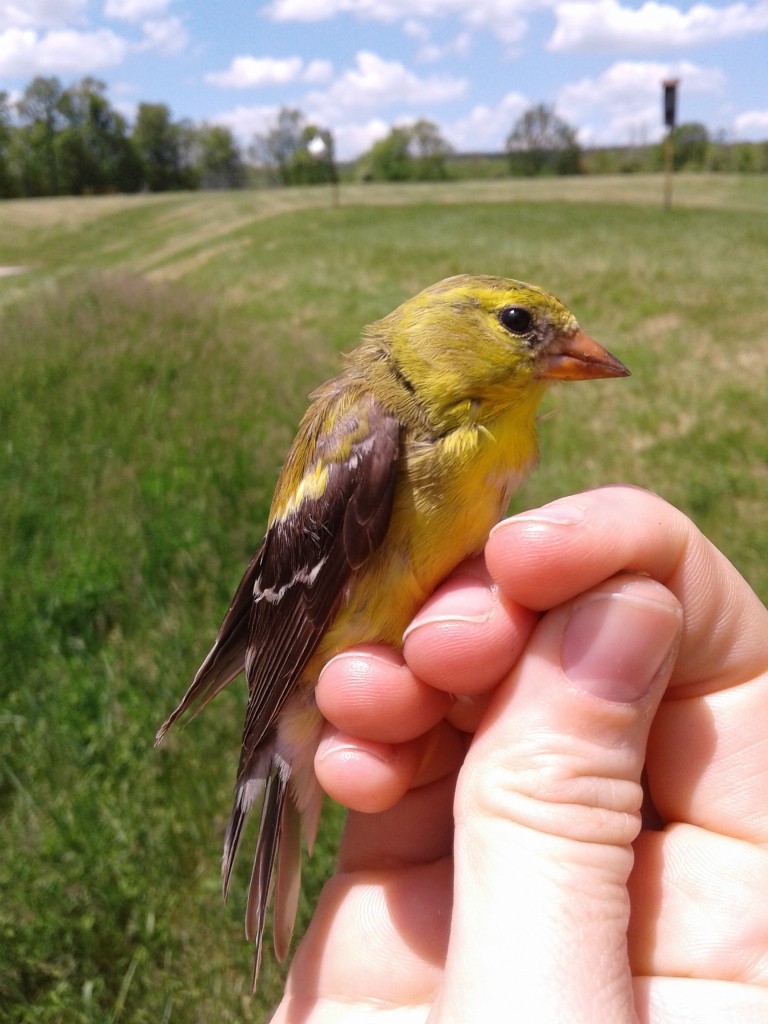
2 American Goldfinches
ET’s: 46 spp.
The highlights of the day include our first Great Crested Flycatcher of the year, our first Belted Kingfisher, and two very vocal and active Eastern Kingbirds flirting about throughout the day. Also spotted a number of times throughout the day were ravens crossing back and forth above the school. During a class with my grade two students we discovered that the first of the tree swallow chicks have hatched in our nestboxes. We all agreed they look like jellybeans. Here’s hoping for a good nesting season!